ServicesWhole-Home Filtration
Whole-Home Filtration in Tolleson
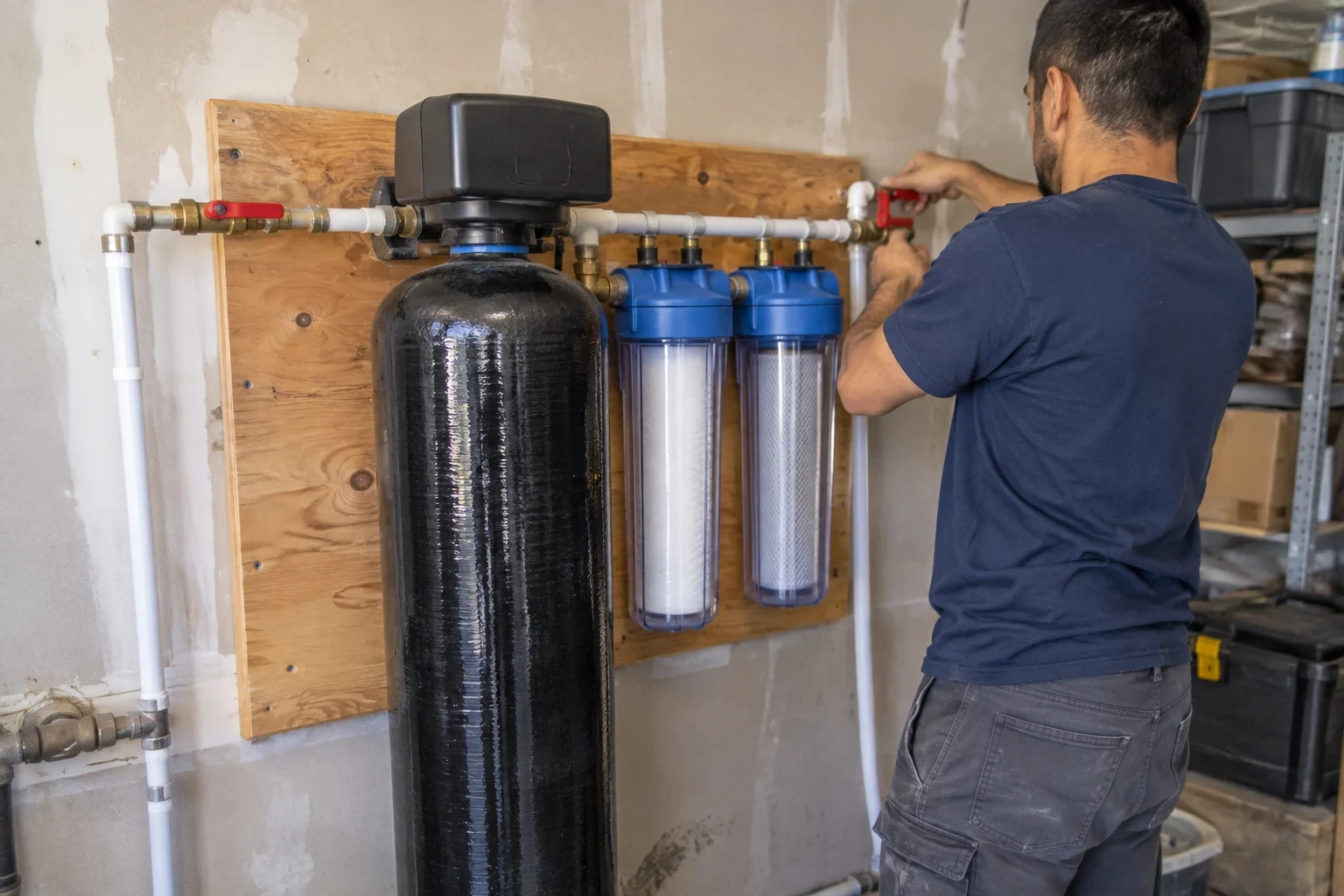
We install a filter right where city water enters your house, so the showers, laundry, water heater and kitchen all draw from treated water. We size the unit to your flow, mount it where cartridges are easy to reach, and set you up to keep it running for years.
What a whole-home filter does for your home
A whole-home filter sits where the water enters your home, before it splits off to the kitchen, bathrooms, laundry and water heater. Most of our systems pair a sediment stage with a carbon stage. The sediment stage catches sand, grit and rust flakes. The carbon stage takes out the chlorine taste and smell that city water carries.
The point is not only better tasting water. Grit wears out faucet cartridges, toilet fill valves and washer inlet screens. Cleaner water at the main line means those parts last longer, and you spend less time replacing them.
A filter only keeps working if it gets looked after. So we plan the upkeep before we install anything: which cartridges it takes, how often they need changing in your home, and where the unit should sit so swapping them is a five minute job, not a weekend project.
What the work includes
- Sizing to your flow
- We look at your bathroom count, household size and pipe size. A filter that is too small drops your water pressure when two showers run at once. We size it so it does not.
- Sediment and carbon stages
- Sediment comes out first so the carbon is not clogged by grit. That order is what keeps the carbon working for its full life.
- Bypass and shutoff valves
- We add a bypass so you keep water in the house while a cartridge is changed or the system is serviced. Shutoffs on both sides make the swap clean.
- A mounting spot you can reach
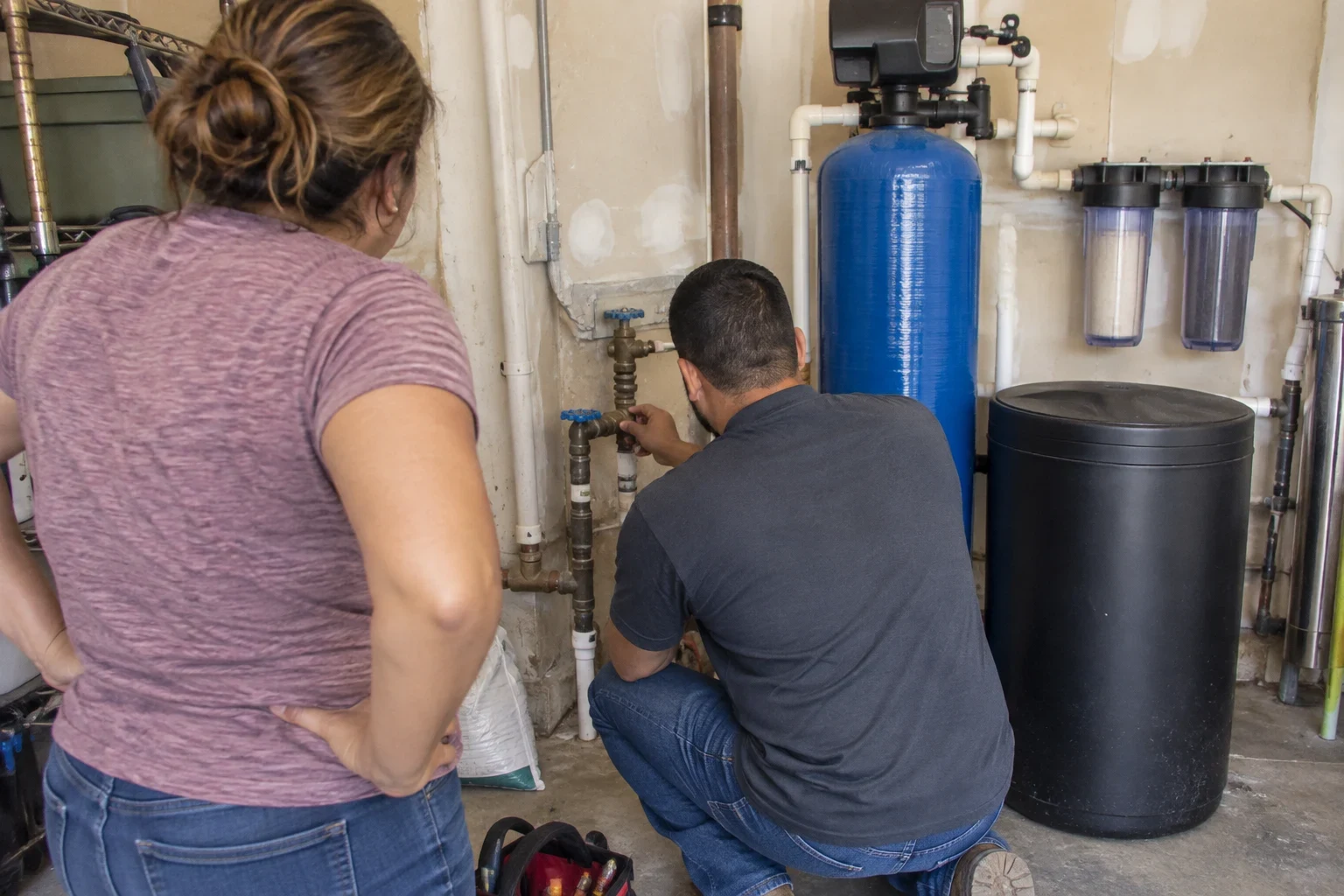
- Many homes here already have a softener loop in the garage, and that is often the best place to tie in. Where there is no loop, we pick a spot with room to work and protection from the worst of the summer heat.
- Pressure gauges
- Gauges before and after the filter show you when a cartridge is loading up. When the gap between the two readings grows, it is time for a change.
- A written upkeep plan
- Before we leave, you get the cartridge part numbers and a change schedule written down. You will not have to guess.
When a main-line filter makes sense
A pool smell when the hot water runs
Hot water lets chlorine escape into the air. That is why the odor is strongest in a closed bathroom during a shower.
Sand or specks in the aerators
Twist off a faucet aerator and you find grit or dark flecks. Whatever lands there is also moving through the valves in every other fixture.
Fixture parts failing ahead of schedule
You keep replacing fill valves, flappers or faucet cartridges. Sediment wears seals and seats, and it shortens their life.
A filter housing nobody has opened
The last owner left a canister in the garage and you have no idea what is in it. An old cartridge can choke your flow while doing little filtering.
Treated water at one sink only
A pitcher or under-sink unit covers what you drink. It does nothing for bathing, laundry or the water heater.
How install day goes
- 1
We talk it through by phone
You tell us about your home, what you notice in the water and where your main line comes in. We explain what system makes sense and give you your quote by phone.
- 2
We protect the work area
We lay down covers where we work and shut off the water at the main. We let you know about how long the water will be off before we start.
- 3
We plumb it in
We cut into the main line or tie into your existing loop, then set the housings, bypass, shutoffs and gauges. Every joint gets checked for leaks under full pressure.
- 4
We flush and walk you through it
New carbon needs a flush to clear fine dust, so we run it until the water is clear. Then we show you how to use the bypass and change a cartridge yourself, and we clean up before we go.
What moves the cost
Every home is a little different, so we price the job after we know your setup. The biggest factors are how big the system needs to be and how hard it is to get to the main line. We go over each part with you so there are no surprises.
- System size
- More bathrooms and more people mean higher flow. That calls for larger housings or a tank-style carbon unit, which costs more up front but lasts longer between changes.
- Where it ties in
- An existing softener loop is the simplest tie-in. Running new pipe from a hard-to-reach main line takes more time and material.
- Cartridge or tank style
- Cartridge systems cost less to install and you swap the cartridges. Tank systems cost more at the start but need media changes much less often.
- Condition of the old setup
- If an old filter or corroded valves need to come out first, that adds labor. We tell you what we find before we do the extra work.
Whole-home filtration questions
Something not covered here? (623) 343-6774
Will my shower pressure drop after the filter goes in?
It should not. A drop usually comes from a housing that is too small for the flow or a cartridge that is packed with sediment. Before we pick a unit, we work out the most water your home pulls at one time, like two showers running while the washer fills. The gauges on either side of the filter show you when a cartridge is due.
How often do the filters need changing?
It depends on the system and how much water your household uses. The sediment cartridge usually wears out first, and the carbon stage lasts longer. We write down a change schedule for your setup so you know which parts to buy and when to swap them.
Does this soften my water too?
No. Carbon and sediment stages handle chlorine taste and grit. They do not pull out the minerals that leave scale, and water in the Valley tends to run hard. Many people pair the filter with our water softener installation, and when a softener is part of the job, the resin carries a 15-year warranty.
What does the warranty cover on this work?
Our labor is covered for 2 years, and the installation itself has a 2-year warranty as well. If a joint or fitting we installed gives you trouble during that time, give us a call and we will come look at it.
Do I still need a reverse osmosis system?
Not always. The main-line filter treats all the water coming into the house. A reverse osmosis system under the kitchen sink takes the water you drink and cook with one step further. We can explain how the two differ, and you decide what fits your home.
Ready for cleaner water at every tap
Tell us how your home is plumbed and what you notice in your water. We will tell you what fits and how to keep it running for years.